Business Name: TREE TRIMMING SAN ANTONIO
Address: 4511 Horizon Hill Blvd, San Antonio, TX 78229
Phone: (726) 227-4061
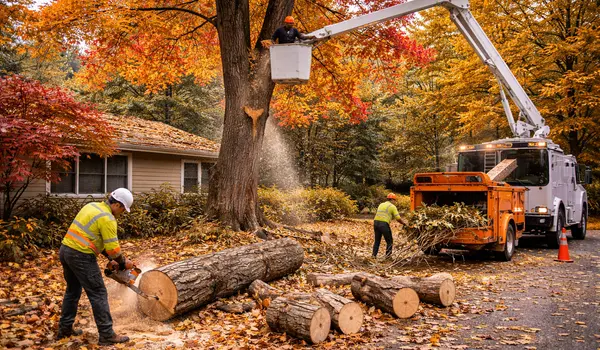
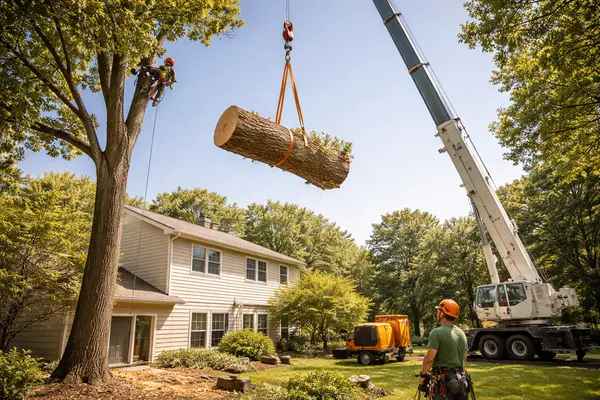
A dead oak over a roof, fence, or driveway presents a different decision than a standing trunk in an open back yard. Tree Trimming San Antonio can remove a tree by climbing and lowering sections with rigging lines, or use a crane where the trunk is too unstable or too close to structures. Climbing generally needs less street access, while crane work can shorten the on-site cutting time but requires room for outriggers and equipment. You can also see everything we do.
Leaving a dead tree in place avoids immediate noise from chainsaws and chippers, but dead wood becomes less predictable as bark loosens and internal decay spreads. Removing only broken limbs may preserve shade and postpone stump work, yet it leaves a compromised trunk to monitor after wind and rain. Full removal creates temporary yard disruption, including sawdust and tire traffic, while eliminating the falling hazard from the trunk and major limbs.
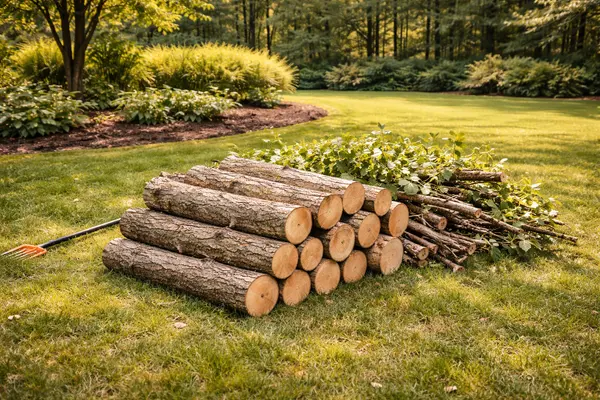
In the days after removal, small wood chips, leaf fragments, and a few sawdust piles can surface after wind or rain, especially around fence lines and planting beds. Fresh soil around a stump area may settle slightly over several weeks. What should not be ignored is a nearby trunk that begins leaning, new dead limbs overhead, or cracked bark that was previously hidden by the removed tree’s canopy. Learn more about our expert Tree Cabling and Bracing services.
Watch adjacent trees after a storm because shared roots, crowded branches, and previous storm breakage can reveal problems that were not visible before. Fungus at the base, exposed root damage, and widening trunk cracks deserve another look rather than routine cleanup. Tree Cabling and Bracing may help retain a living tree with weak branch unions, while periodic pruning and removal of new deadwood keep weight from building in vulnerable limbs.
The visit typically begins with a Tree Risk Assessment of the trunk, root flare, overhead limbs, utility clearance, gates, roof edges, and access for trucks. Crews identify where sections can land safely and protect nearby surfaces with controlled work zones. Climbing gear and chainsaws are used to remove limbs in manageable pieces. If branches extend over a shed or pool, rigging lines guide each cut away from the structure instead of dropping it freely.
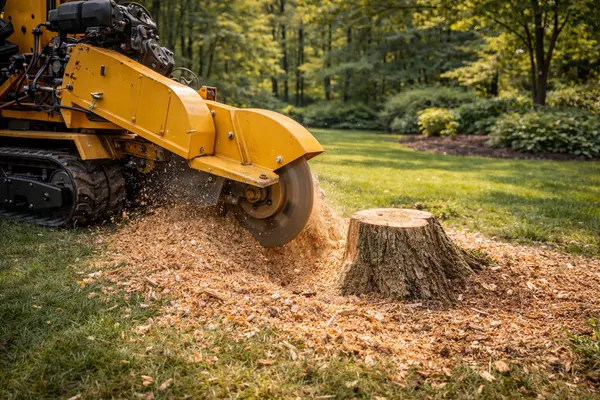
After upper branches are cleared, sectional felling reduces the remaining trunk from the top down or directs it into an open landing area. A crane may lift large trunk rounds where lowering them would damage a driveway or landscape bed. Debris chipping turns brush into chips for removal or agreed placement. Stump grinding follows if selected, using a rotating cutter to reduce the stump below grade so soil, sod, or a new planting area can be restored.

Height is only one part of the job. A 25-foot dead cedar beside a clear alley may come down quickly, while a similar tree wedged between a garage, power line, and masonry wall requires smaller cuts and more rigging. A gate narrower than equipment, soft soil after rain, steep grades, and sprinkler heads can change where trucks park and how debris moves, adding handling rather than simply adding cutting.
Previous trimming, storm damage, and hidden decay often change the plan once the canopy and trunk are inspected closely. A tree that looks solid from the sidewalk may have hollow sections, fungus at the root collar, or a split leader that prevents a straightforward directional fall. Scheduling also depends on weather, ground conditions, and required utility coordination. Smaller accessible removals may take part of a day; complex crane or rigging work can extend beyond that.
TREE TRIMMING SAN ANTONIO
4511 Horizon Hill Blvd, San Antonio, TX 78229
(726) 227-4061
info@treetrimmingsanantonio.net
Hours of Operation
Open 24 Hours